
Trades
History across every account, grouped by leader trade.
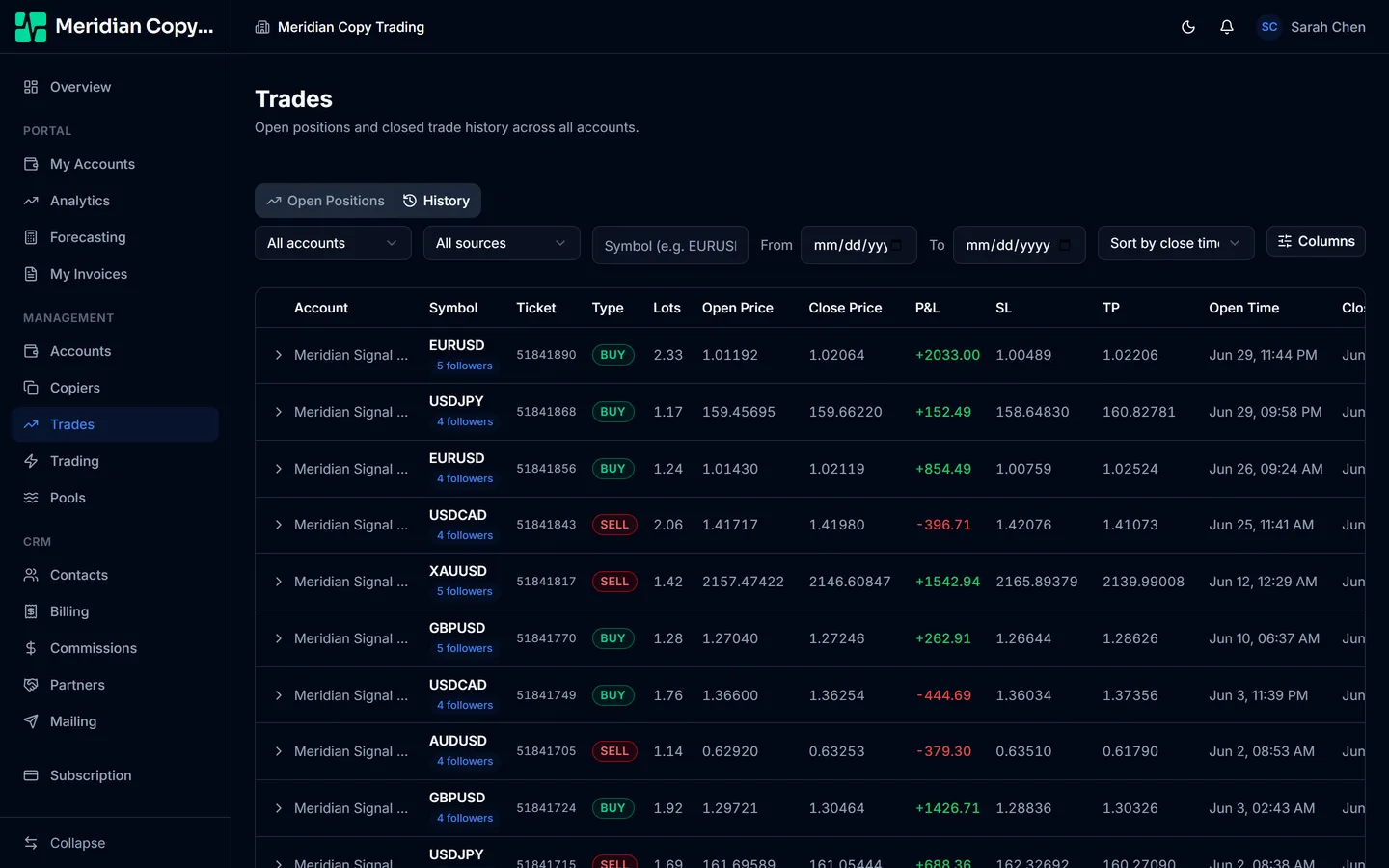
Trades is one page with two tabs — Open Positions and History — covering every account you can see: the leader's trades and the copies they produced. An account filter above the table narrows it to one account.
This page covers History. For live positions and closing one by hand, see Open positions.
Rows group by leader trade
The chevron on the left expands a row. A parent trade opens to reveal the follower copies it produced — same symbol, same direction, different sizes and slightly different fill prices. The parent row shows the follower count, so you can see at a glance whether everyone got it.
This is what makes the page worth using rather than reading each account separately. One expanded row answers the question you actually have: the leader took this trade; what did each follower get, and did anyone miss it?
A follower missing from an expanded group did not receive that trade. The reason is on that copier's own page, in its copy events — see Filters and limits.
Columns
Account, Symbol, Ticket, Type, Lots, Open Price, Close Price, P&L, SL, TP, Open Time, Close Time, Magic, and Comment. Use Columns to hide what you do not need; drag the headers to resize.
Magic and Comment are the two worth knowing about. Trademetry stamps every copy it places with a magic number and a comment carrying the parent ticket, so a copy stays traceable to its source even when read directly in the MetaTrader terminal.
P&L is the trade's own result. Commission and swap are recorded separately and are included wherever Trademetry reports net profit, so analytics figures are net of both.
Times are yours
Every timestamp is stored in UTC and displayed in your browser's local timezone. Date filters convert your local dates to UTC before comparing, so "yesterday" means your yesterday.
Where trade history comes from
You do not import it by hand. When an account connects, Trademetry pulls its history from the broker and rebuilds a daily equity curve from it, so analytics reach back before the account joined rather than starting from zero. Deposits and withdrawals come across too, which is what keeps performance figures honest.
It keeps up afterwards as well: history is re-synced periodically, so trades closed directly in the terminal, and swaps charged overnight, appear without anyone asking for them.